Mindful Monday · November 23, 2026 · By Bella
The Things I Did Today: Ending the Day With Progress Over Perfection
A gentle evening practice for recognizing care, connection, and the small things that deserve a place in the story of your day.
At the end of the day, what do you remember first?
The things you accomplished—or the things still waiting for you?
I have been thinking about this because it is so easy for my evening thoughts to become a running list of everything I didn’t finish.
The laundry. The assignment. The message I meant to answer. The project that took longer than expected.
Somehow, an entire day of living can disappear behind a handful of unchecked boxes.
Lately, I have been practicing something different. Before I settle into bed, I make a list of everything I did.
And when I say everything, I mean everything.
- Took a shower.
- Brushed my teeth.
- Got dressed.
- Did some stretching.
- Read for an hour.
- Gave my child a hug.
Those things belong on the page, too.
We have talked before about making room for gentle routines in Soft Plans, Small Wins & Nourishing New Beginnings. This is another way I am trying to bring that idea into my everyday life: taking a moment to recognize what actually happened before deciding the day wasn’t enough.
Giving the ordinary things their place
A shower may seem like an automatic part of someone else’s day. On another person’s day, it can take planning, energy, determination, and recovery afterward.
Reading might look like leisure, but making room for something you enjoy matters. Stretching might only take a few minutes, but those minutes still represent time spent caring for your body.
And giving my child a hug? That deserves a place on my list.
It may never appear on a productivity tracker. It still matters to the life I am building.
I want my record of the day to include care, connection, learning, enjoyment, and rest. Otherwise, I am measuring a very full human life with a very narrow checklist.
There are also things we do that are easy to overlook because they never become a finished object. Listening. Making a decision. Asking for help. Taking a break before we become completely overwhelmed.
They count even when there is nothing to photograph, submit, fold, or put away.
Making room for a fuller account of the day
When I am tired, “I didn’t do enough” can feel like a complete description of my day.
Writing things down gives me something specific to look at.
I can still acknowledge that I didn’t finish an assignment. I can also acknowledge that I read, stretched, cared for myself, and showed affection to my child.
Both belong in the same account.
I don’t have to pretend a difficult day was wonderful. I can write, “Today was hard, and I still did these things.”
That feels more honest—and kinder—than letting unfinished work tell the whole story.
What the research can—and cannot—tell us
There is research that connects with the ideas behind this practice, although it does not establish my exact evening routine as a proven treatment.
One relevant area is progress monitoring. Harkin and colleagues analyzed 138 experimental studies involving 19,951 participants. They found that interventions encouraging people to monitor their progress improved goal attainment on average, with stronger effects when progress was recorded. Those studies concerned working toward goals; they did not specifically test a bedtime list of everyday acts of care. Still, they offer support for making progress visible instead of relying entirely on memory. [1]
For me, the useful connection is simple: if I never record the small steps, they are easy to leave out when I evaluate my day.
Another relevant area is self-compassion. A systematic review and meta-analysis by Wakelin, Perman, and Simonds found that self-compassion interventions reduced self-criticism compared with control conditions, with a medium average effect. The authors also noted limitations, including moderate study quality and substantial variation between studies. This supports taking a kinder approach to ourselves, while leaving open the question of how much a particular practice—like my list—might help. [2]
I see my list as a small opportunity to practice that kindness.
If someone I loved told me they had showered, stretched, read, and spent a caring moment with their child, I would recognize those things. I am trying to give myself the same consideration.
Where Mindsera and Mirror fit in
I recently downloaded Mindsera and Mirror, and I am exploring both as places to reflect.
Yes, I am journaling. Yes, I am following prompts. But the purpose I keep returning to is recognizing my day more fully.
Mindsera offers writing, voice input, and the option to extract text from a photographed journal page, alongside AI-assisted reflection tools. Those are features I am exploring, rather than evidence that the app itself will produce a particular mental-health outcome. [4]
If you would like to take a look, here is Mindsera.
Mirror offers text, audio, and video journaling, along with guided prompts and mood check-ins. It was developed by experts at the Child Mind Institute, with a particular focus on supporting young people’s self-reflection. [5]
You can download Mirror Journal through my shared link if you would like to explore it, too.
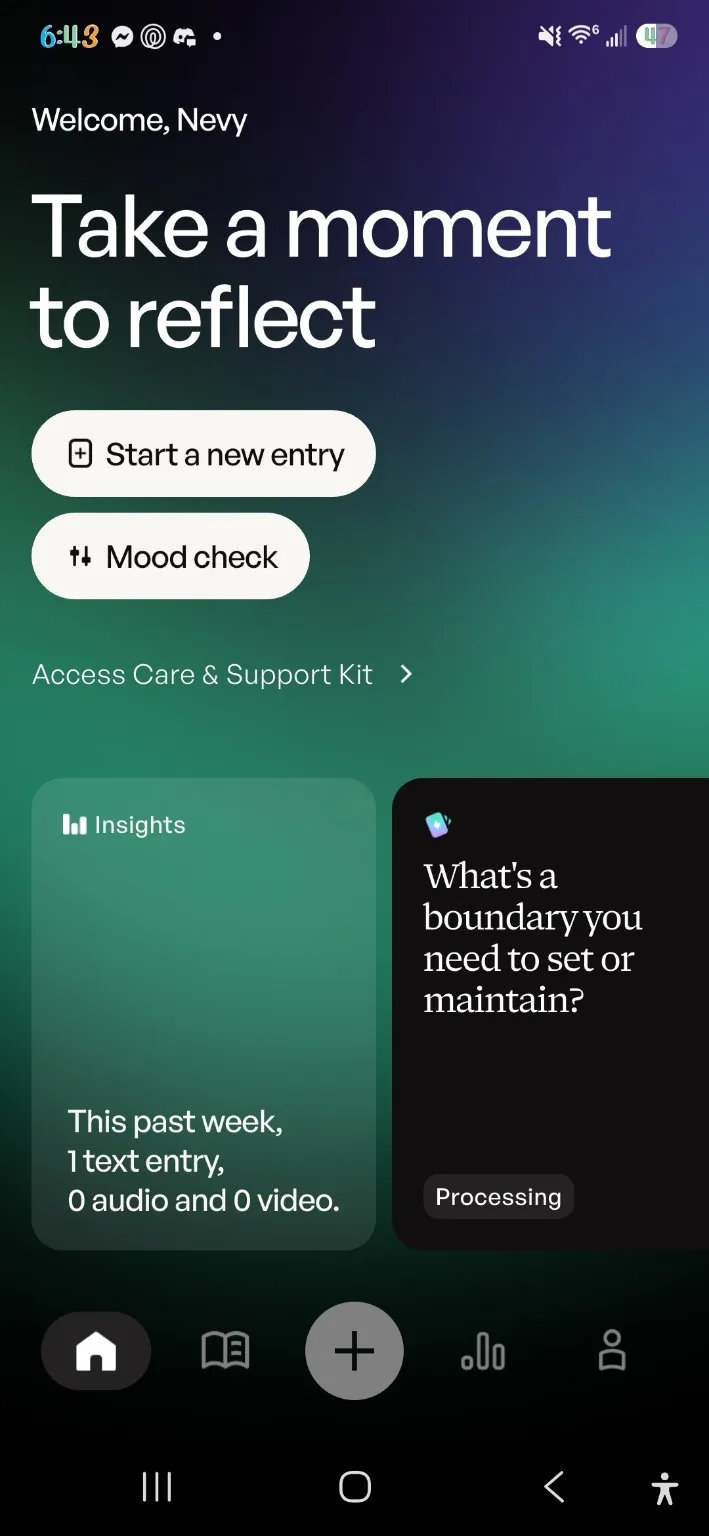
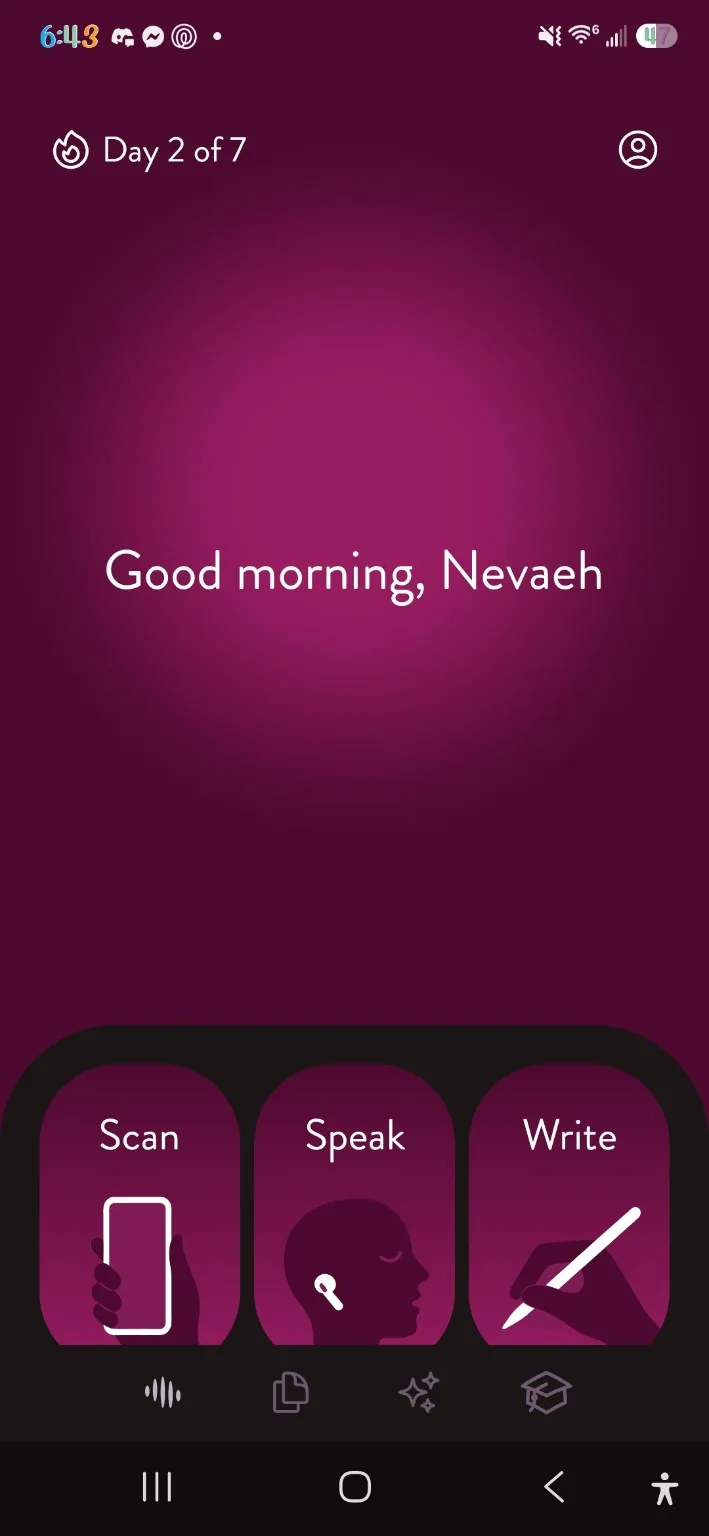
These apps are tools I am trying. The heart of my practice could also happen in a notebook, a voice note, or a simple notes app.
The place I put the words matters less to me than remembering to include them.
The last reflection before I wind down
This list has become the last thing I do before setting my phone to the Calm app at bedtime.
I want to give my final reflections a different starting point: progress over perfection.
Since I started this routine, I have been sleeping better. My Garmin watch has also tracked better sleep metrics, and I have been waking up in a better mood.
That is a meaningful change for me. It is something I have noticed in how I feel, alongside the changes recorded by my watch. I am sharing my experience, rather than claiming that the list alone caused those improvements or that everyone will have the same result. My Garmin observations are personal tracking data, not a controlled study.
I also want to be careful about the science here. In a small laboratory study of 57 healthy young adults, participants who wrote a future to-do list fell asleep faster than participants who wrote about completed activities. That study does not support claiming that a completed list will help everyone fall asleep faster, and it did not test my full routine of listing small acts of care and then using Calm. [3]
My experience and the research can both have a place in this conversation. For me, this has become a reassuring way to close the day, and I am paying attention to how I feel when I wake up, too.
If reflecting at bedtime feels helpful, that can be a useful personal observation. If it becomes mentally busy or turns into another review of unfinished work, doing it earlier—or keeping it shorter—is an option.
The routine should have room to adapt to the person using it.
A gentle way to try it
If you want to experiment with your own list, start with:
Today, I…
Then write a few things you actually did.
Include something you did for your body. Something you learned or enjoyed. A moment of connection. A responsibility you handled. A time you respected a limit.
You might write:
Today, I brushed my teeth. I answered one difficult email. I read a chapter. I hugged someone I love. I rested when I needed to.
You do not need a long list. You do not need to remember every minute. And there is no requirement to turn this into another streak you feel guilty about breaking.
Although I like listing everything I can remember, the length of the list is not a measure of my worth. A short list does not make me less deserving of care or rest.
Some evenings, a single sentence may be enough:
Today was difficult. I took care of myself in the ways I could.
The small things are part of your life, too
I still have goals. I still have unfinished work. I still have days when I wish I had managed more.
But I am practicing remembering the shower alongside the assignment. The stretching alongside the laundry. The hour spent reading alongside the messages waiting for an answer.
And the hug belongs there, too.
Especially the hug.
Tonight, before you decide you did nothing, give yourself a moment to remember what you did.
What is one thing from your day that deserves a little recognition? 💜
Progress over perfection. One small, human moment at a time.
With love and a little cozy chaos,
💜 Bella | Paper & Pixie Dust
Research and references
- Harkin, B., et al. (2016). Does monitoring goal progress promote goal attainment? A meta-analysis of the experimental evidence. Psychological Bulletin, 142(2), 198–229.
- Wakelin, K. E., Perman, G., & Simonds, L. M. (2022). Effectiveness of self-compassion-related interventions for reducing self-criticism: A systematic review and meta-analysis. Clinical Psychology & Psychotherapy, 29(1), 1–25.
- Scullin, M. K., Krueger, M. L., Ballard, H. K., Pruett, N., & Bliwise, D. L. (2018). The effects of bedtime writing on difficulty falling asleep: A polysomnographic study comparing to-do lists and completed activity lists. Journal of Experimental Psychology: General, 147(1), 139–146.
- Mindsera: official app information. Consulted November 23, 2026; cited for app features, not independent evidence of effectiveness.
- Child Mind Institute. Mirror: a journaling app for self-reflection. Consulted November 23, 2026; cited for app features and development background.